How L# Quietly Kills the Hours You Never Knew You Were Losing to Debugging
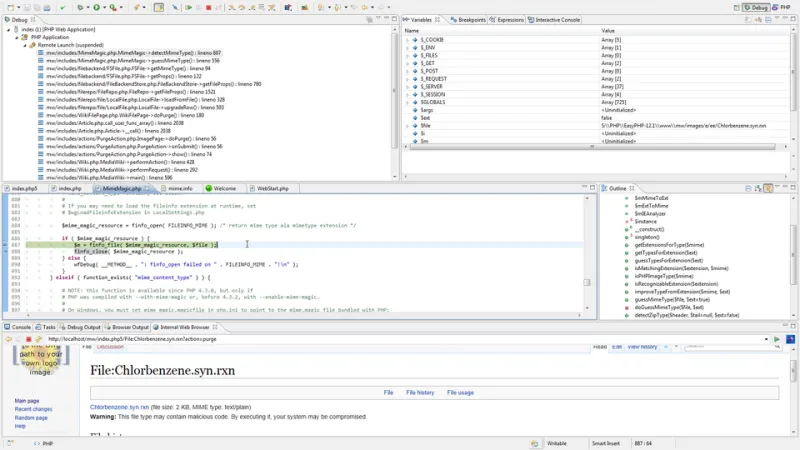
Photo: Rillke (screenshot) MediaWiki software developers Eclipse contributors and others Tournesol.png: Anthere, EPL, via Wikimedia Commons
Ask any developer how long they spend debugging on a given week and you'll get a shrug, maybe a laugh. "Depends on the day." That vagueness is part of the problem. Debugging is so woven into the rhythm of modern software development that most folks don't even track it as its own cost center. It's just the job.
But when engineering teams at a handful of mid-sized US startups started logging their time more granularly, the numbers were uncomfortable. One backend team in Austin found that nearly 30% of their sprint hours were getting eaten by debugging sessions—most of them chasing down issues that a stricter language or compiler would have flagged before the code ever ran. Another team in Chicago, building internal tooling in a dynamically typed language, pegged their debugging overhead at closer to 35% once they factored in code review cycles triggered by runtime surprises.
This is what the industry quietly calls the debugging tax. And L# was built, at least in part, to make it as small as possible.
The Hidden Math Behind Every Bug You Chase
Here's the thing about debugging time: it compounds. A bug that takes 20 minutes to fix often costs two hours of actual developer time once you factor in the context-switching, the reproduction steps, the log-diving, the Slack thread asking if anyone else has seen this, and the mental reset afterward. Multiply that across a team of five or ten engineers, and you're looking at a meaningful chunk of your product velocity just... evaporating.
The frustrating part is that a large percentage of those bugs aren't novel. They're the same categories of errors that show up in project after project: unhandled null cases, incomplete switch logic, mismatched data shapes, silent failures at API boundaries. Experienced developers know these patterns by heart because they've been burned by them repeatedly.
L# treats this category of bug as a compiler problem, not a developer problem. The language was designed on the premise that if a whole class of errors can be caught mechanically, they should be—every single time, not just when someone remembers to write the right test.
Pattern Matching That Actually Exhausts Possibilities
One of the first things L# developers tend to rave about is exhaustiveness checking in pattern matching. If you're matching on a discriminated union and you haven't covered every case, the compiler doesn't silently let it slide. It tells you, clearly, which branches you missed.
This sounds like a small thing until you've spent three hours debugging a production incident that traced back to a match expression that fell through to a default case nobody intended. Marcus T., a senior engineer at a fintech company in Denver, put it bluntly: "I used to budget time every sprint for what I called 'the ghost bugs'—the ones that only showed up in edge cases at runtime. Since we moved our core processing pipeline to L#, that budget is basically zero. The compiler catches the edge cases I forgot about before I even run the code."
That's not a marginal improvement. That's a structural change in how much cognitive load a developer has to carry while writing code.
Before and After: A Real Migration Story
A small product team in Portland spent about eight months migrating their core data transformation layer from a dynamically typed language to L#. They weren't doing it for ideological reasons—they were doing it because their on-call rotation was brutal, and most of the pages were the same flavors of runtime error.
Before the migration, their team lead estimated they were spending roughly 25% of engineering time on debugging and hotfixes related to type mismatches, unhandled states, and brittle conditional logic. After the migration, that number dropped to around 8%. The team didn't get smarter. The codebase didn't get simpler. The language just stopped letting certain categories of mistakes make it to runtime.
"The first month after we finished the migration, our on-call was almost boring," the team lead said. "We kept waiting for the other shoe to drop. It mostly didn't."
The reclaimed time went directly into feature work. Two features that had been sitting in the backlog for months shipped within the quarter following the migration.
Compiler Feedback as a First-Class Feature
Another piece of the puzzle is when and how L# surfaces problems. A lot of languages technically have type systems, but their error messages are famously cryptic—or worse, misleading. Developers learn to distrust their tools, which means they spend extra time second-guessing compiler output and running manual tests to confirm what the compiler is or isn't actually telling them.
L# puts a lot of emphasis on error messages that point you to the actual problem, not a downstream symptom of it. When the compiler flags something, it tends to be specific about what it found, where it found it, and why it matters. That directness cuts down on the diagnostic phase of debugging significantly.
Jamila R., a freelance developer based in Atlanta who works across several client projects simultaneously, described it this way: "With other languages, I'd get an error and spend fifteen minutes figuring out what the error was actually about. With L#, I usually know what I need to fix before I've even finished reading the message. That adds up fast when you're bouncing between projects."
The Competitive Angle Nobody Talks About
Language choice is usually framed around features, ecosystem size, or hiring pipelines. Debugging efficiency almost never comes up in those conversations—but it probably should.
If your team is shipping 25-30% faster because they're not hemorrhaging hours to debugging sessions, that's a real competitive advantage. It's not as flashy as a new framework or a microservices architecture, but it shows up in your velocity numbers, your on-call quality of life, and ultimately in how quickly you can respond to what your users actually need.
The debugging tax is real, it's large, and most teams have just accepted it as the cost of doing business. L# makes a compelling case that you don't have to.
If you haven't looked seriously at what your current language is costing you in invisible debugging hours, it might be worth running the numbers. You might not love what you find—but knowing is the first step to fixing it.