Stop Paying the Memory Tax: How L# Puts You Back in Control of Performance
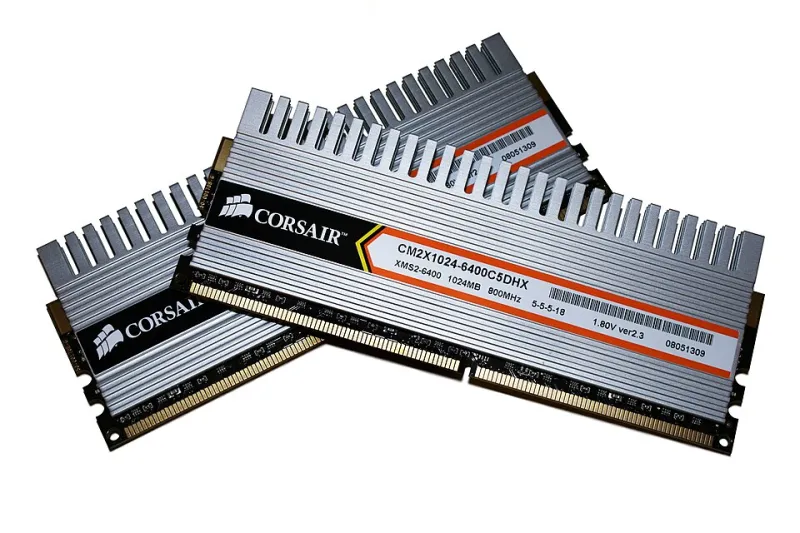
Photo: Victorrocha, CC BY 3.0, via Wikimedia Commons
There's a deal most developers make early in their careers without realizing it. You pick up a language with automatic garbage collection — Java, C#, Go, Python — and in exchange for not thinking too hard about memory, you hand over a slice of your application's performance. For a lot of use cases, that's a perfectly fine trade. But as systems grow more demanding, that slice starts to feel less like a reasonable fee and more like a toll you didn't know you were paying.
L# takes a different approach. And once you see what that looks like in practice, it's tough to go back.
What Garbage Collection Is Actually Costing You
Garbage collection is one of those things that sounds like pure upside until you're staring at a latency spike at 2 a.m. wondering why your perfectly tuned service just hiccuped for 80 milliseconds. The GC didn't ask your permission. It just decided it was time to clean house.
The problem isn't that garbage collection is bad — it's that it's unpredictable. Modern GC implementations in languages like Java (G1GC, ZGC) and .NET have gotten genuinely impressive, but they're still making decisions on your behalf based on heuristics and heap pressure. You're not driving; you're a passenger.
For most CRUD apps and internal tooling, that's fine. But in high-frequency trading systems, real-time audio processing, game engines, or latency-sensitive APIs, those pauses compound. A 10ms GC pause might sound trivial until it's happening dozens of times per minute and your p99 latency looks like it has a drinking problem.
There's also the throughput cost that doesn't show up as a pause. GC pressure — the overhead of allocating objects, tracking references, and running write barriers — is always present. It's just usually quiet enough that you don't notice it until you actually profile.
How L# Approaches Memory Differently
L# doesn't use a traditional garbage collector. Instead, it gives developers a structured ownership and lifetime model that makes memory management explicit without turning your codebase into a manual malloc/free nightmare.
The core idea is that every value in L# has a clearly defined scope and owner. When a value goes out of scope, its memory is released immediately and deterministically — no collector needed, no pauses scheduled. The compiler enforces these rules at build time, which means the class of bugs that GC languages protect you from (dangling pointers, double frees) are caught before your code ever runs.
This is sometimes called deterministic resource management, and it's not a new concept — Rust developers will recognize the philosophy. But L# approaches it with a syntax and ergonomics designed to feel accessible to developers coming from C# or TypeScript backgrounds, which makes adoption a lot more realistic for teams that aren't systems programming veterans.
Real Numbers From Production Systems
The theory is compelling, but let's talk about what teams are actually seeing.
One engineering team running a real-time analytics pipeline — the kind that ingests event streams and needs to respond in under 5ms — ported a core processing module from C# to L# over the course of a few sprints. Their results: median latency dropped by roughly 30%, and p99 latency dropped by over 60%. The GC pauses that had been spiking their worst-case numbers simply stopped happening.
Another team building a low-latency API gateway saw memory usage become dramatically more predictable. Not necessarily lower on average, but flat — no sawtooth allocation patterns, no surprise heap growth under load. That predictability made capacity planning significantly easier and eliminated a whole category of on-call incidents.
These aren't cherry-picked edge cases. They're the kind of results you'd expect when you remove a layer of indirection between your code and the hardware.
"But Isn't Manual Memory Management Hard?"
This is the question that comes up every time someone mentions moving away from GC languages, and it's a fair one. Manual memory management in C is legitimately hard. It's error-prone, it requires deep expertise, and it's responsible for a staggering percentage of security vulnerabilities in legacy systems.
L# is not that.
The ownership model means the compiler is your safety net. You're not manually tracking allocations — you're expressing intent about ownership and lifetimes, and the compiler verifies that your intent is consistent. If you try to use a value after it's been released, that's a compile-time error, not a runtime crash.
The ergonomics matter here. L# was designed with developer experience as a first-class concern, not an afterthought. The borrow checker (yes, L# has one, and no, it's not as aggressive as Rust's) is smart enough to handle the common cases without requiring you to annotate everything. You write code that looks and feels fairly natural, and the compiler does the heavy lifting to verify safety.
There's a learning curve. That's honest. But it's a curve that pays dividends in performance, reliability, and a deeper understanding of what your code is actually doing.
When to Care (And When Not To)
L# isn't the right tool for every job, and nobody's saying it is. If you're building a marketing site, an admin dashboard, or a mobile app where 50ms latency is imperceptible, the GC tax is probably not worth worrying about. Stick with whatever your team knows best.
But if you're building something where performance is a product feature — where latency, throughput, or resource efficiency directly affects user experience or operating costs — the calculus changes. The GC tax is real, it compounds, and it's worth understanding what you're actually paying.
L# gives you a way to opt out. Not by throwing you into the deep end of manual memory management, but by giving you the tools to be intentional about how your program uses resources — with the compiler watching your back the whole time.
That's not just a performance win. That's a mindset shift. And once you've felt the difference between guessing what the GC is going to do and knowing exactly when memory is released, it's hard to call the old way progress.
Code sharp. Think sharp. Build sharp — and stop leaving performance on the table.