Lean and Mean: How Small Dev Teams Are Outrunning Funded Giants With L#

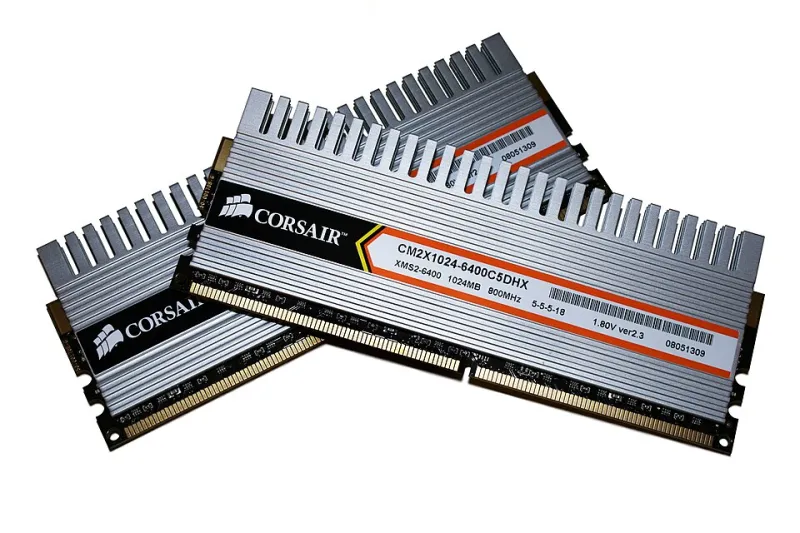
Photo: M.aljar3i, CC BY-SA 3.0, via Wikimedia Commons
There's a particular kind of stress that comes with building a startup on a shoestring. Every dollar spent on infrastructure is a dollar not spent on hiring. Every hour lost waiting on builds is an hour not spent shipping features. And every time your app crawls under load, you're not just losing users — you're losing the confidence of the people who believed in you enough to use your product in the first place.
So it's worth paying attention when a growing number of bootstrapped founders say that switching to L# materially changed those numbers. Not slightly. Materially.
The Build Time Problem Nobody Talks About Enough
Here's something that doesn't show up in pitch decks: the cumulative time developers spend waiting on their toolchain. On a large TypeScript or Java project, a full rebuild can run anywhere from 45 seconds to several minutes. Multiply that across a team of five, across dozens of iterations a day, and you're looking at hours of dead time every single week.
L#'s compiler was designed with tight feedback loops in mind. Several founders we spoke with reported incremental build times under five seconds on mid-sized codebases, and full rebuilds measured in the low tens of seconds even on projects with meaningful complexity. That's not just a quality-of-life improvement — it's a compounding velocity advantage.
"We were on a Node stack before, and honestly the build times weren't even the worst part," said Marcus Okafor, co-founder of a logistics SaaS company based in Austin. "It was the runtime surprises. We'd ship something that looked fine in staging and then watch it fall apart under real traffic. With L#, what we see in development is basically what we get in production. That predictability is worth more than I can quantify."
Predictability as a Competitive Moat
That word — predictability — came up again and again in conversations with L# adopters. And it makes sense when you think about what L# is actually doing differently.
Because L# gives developers fine-grained control over memory and execution behavior, there's far less guesswork about how your application will perform under load. You're not at the mercy of a garbage collector deciding to run at an inconvenient moment. You're not dealing with JIT warm-up penalties that make your p99 latency look like a ransom note. You write code, you understand what it costs, and it does what you expect.
For a funded team with dedicated SREs and the budget to over-provision infrastructure, this matters less. You can throw hardware at unpredictable behavior. But for a bootstrapped team running lean on AWS or Fly.io, predictable performance means you can right-size your instances from day one instead of playing a months-long guessing game.
Jennifer Lau, who bootstrapped a developer tooling company out of Seattle, put it bluntly: "We were spending around $4,200 a month on compute before we migrated our core services to L#. After the migration, we got that down to about $1,600 for the same workload. That's not a rounding error. That's two months of runway."
Time-to-Market in the Real World
Venture-backed teams have advantages that are genuinely hard to compete with. They can hire faster, run more experiments in parallel, and absorb the cost of failed bets. But they also have overhead — more process, more coordination, more stakeholders with opinions about the roadmap.
Bootstrapped teams are often faster in the ways that matter most at the early stage: deciding, building, shipping, and iterating. L# amplifies that natural advantage by keeping the gap between idea and deployed feature as small as possible.
Several founders cited L#'s standard library as a meaningful contributor to shipping speed. Rather than stitching together half a dozen third-party packages to handle common tasks — each with its own quirks, version conflicts, and maintenance burden — L# ships with enough built-in functionality that small teams can stay focused on their actual product.
"We launched our beta six weeks ahead of where I thought we'd be," said David Reyes, who's building a B2B analytics platform in Denver. "Some of that was just execution, but a real chunk of it was not fighting the stack. L# kind of gets out of your way."
The Infrastructure Cost Equation
Lower resource overhead isn't just about cloud bills, though that's obviously a big deal when you're watching every expense. It also affects your architectural decisions in ways that compound over time.
When your runtime is efficient, you don't need to introduce caching layers as early. You don't need to prematurely shard your database. You don't need to spin up a message queue to offload work that your application should just be able to handle directly. Each of those decisions you don't have to make yet is complexity you don't have to manage, debug, or explain to a new hire.
This is a quieter advantage than raw build speed, but it might be the most durable one. Funded competitors can buy their way out of performance problems. Simpler architecture is harder to buy. It has to be built in from the start.
What This Doesn't Mean
To be clear: L# isn't a magic startup accelerator. The founders who are seeing these gains are also good engineers making smart product decisions. The language helps, but it doesn't replace judgment.
And L# has a learning curve, particularly for developers coming from languages that abstract away memory management. The productivity gains tend to show up after a team has gotten comfortable with the language's model — not on day one.
But for teams willing to put in that initial investment, the downstream benefits are real and measurable. Faster builds. Lower bills. More predictable systems. Fewer fires at 2 a.m.
In a startup ecosystem where runway is everything, that's not a marginal improvement. That's a different game.